Economics 101 (#8) Market Equilibrium

October 11, 2011

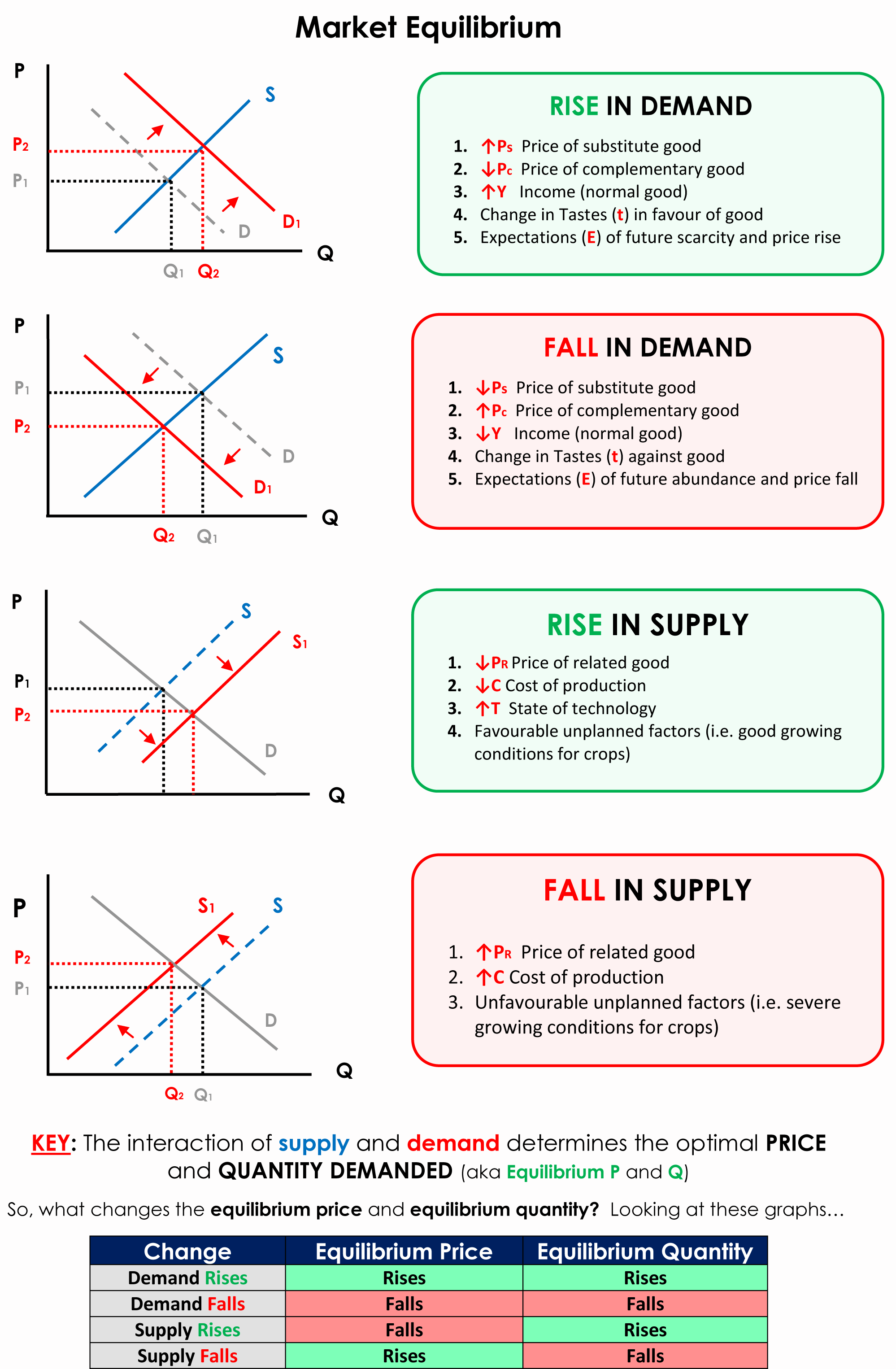
To understand basic economics means understanding how supply and demand interact. Although in real world terms its difficult to measure, in theory the optimal (equilibrium) price and quantity demanded is found by seeing where these two curves meet. But these curves move, as you saw in #6 and #7. Putting #6 and #7 together…lets look at some graphs and then talk about equilibrium price and quantities.
Heres the PDF  PIIGSTY Econ 101 #8 Market Equilibrium

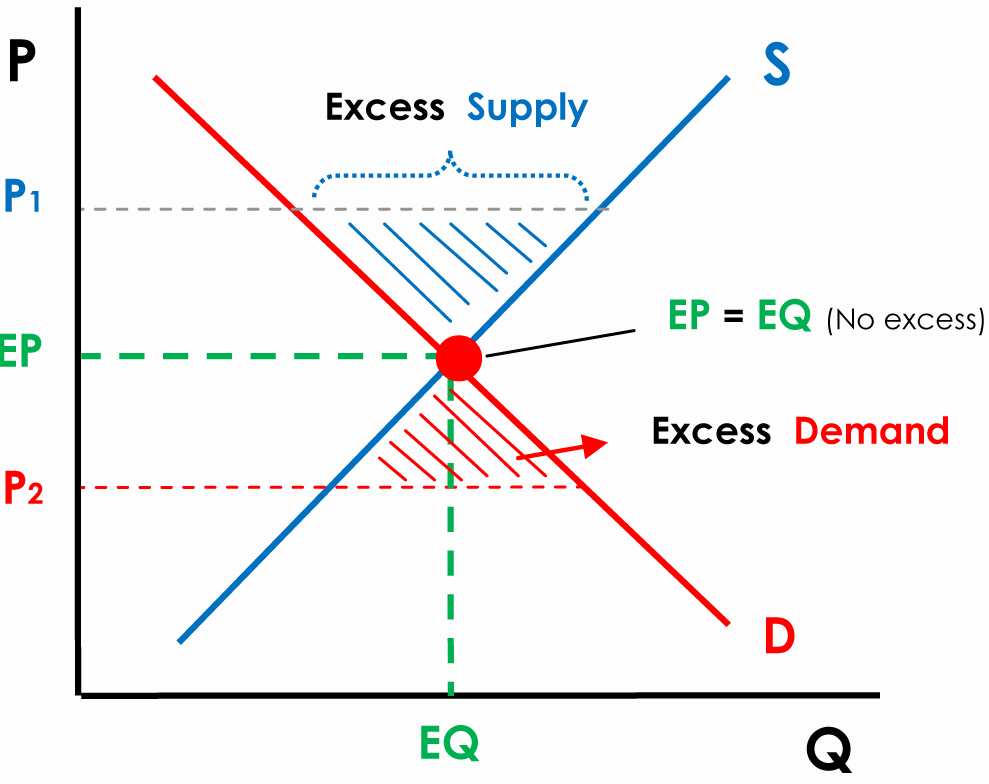
First, the basic interaction of supply and demand. If supply exceeds demand, there is excess supply (@ Price =P1). If demand exceeds supply, there is  excess demand (@ Price = P2)

Now, lets look at the interaction between demand and supply and show how changes in both can change the optimal/equilibrium price and quantity in the marketplace for Good X.


Economics 101 (#7) Supply

October 11, 2011

Now that we’ve covered demand and what factors influence it, next up is its close companion ‘Supply’

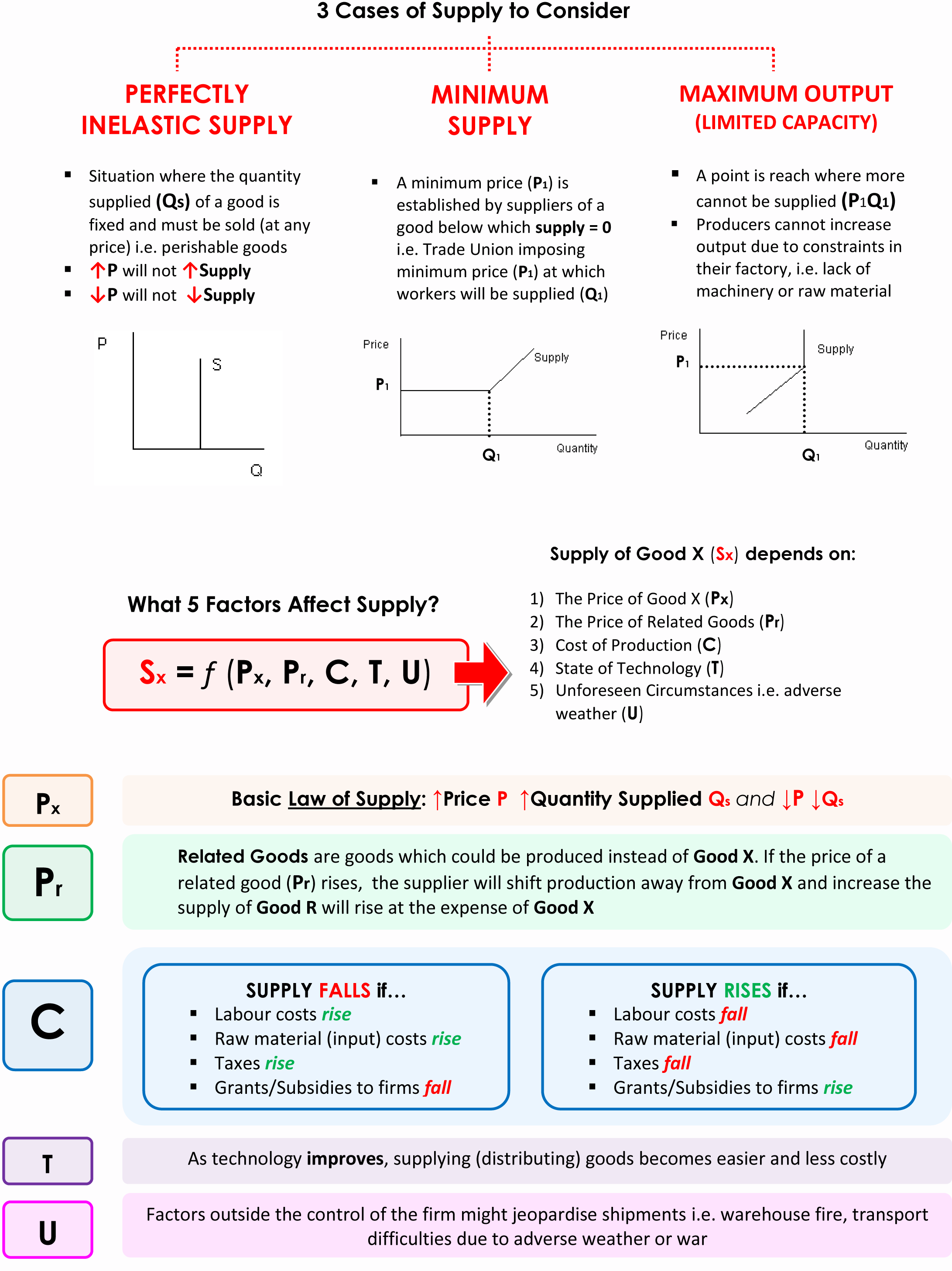
This class details three specific (non-ordinary) cases of supply and what factors affect supply generally.

Heres the PDF PIIGSTY Econ 101 #7 Supply


Economics 101 (#6) Demand

October 10, 2011

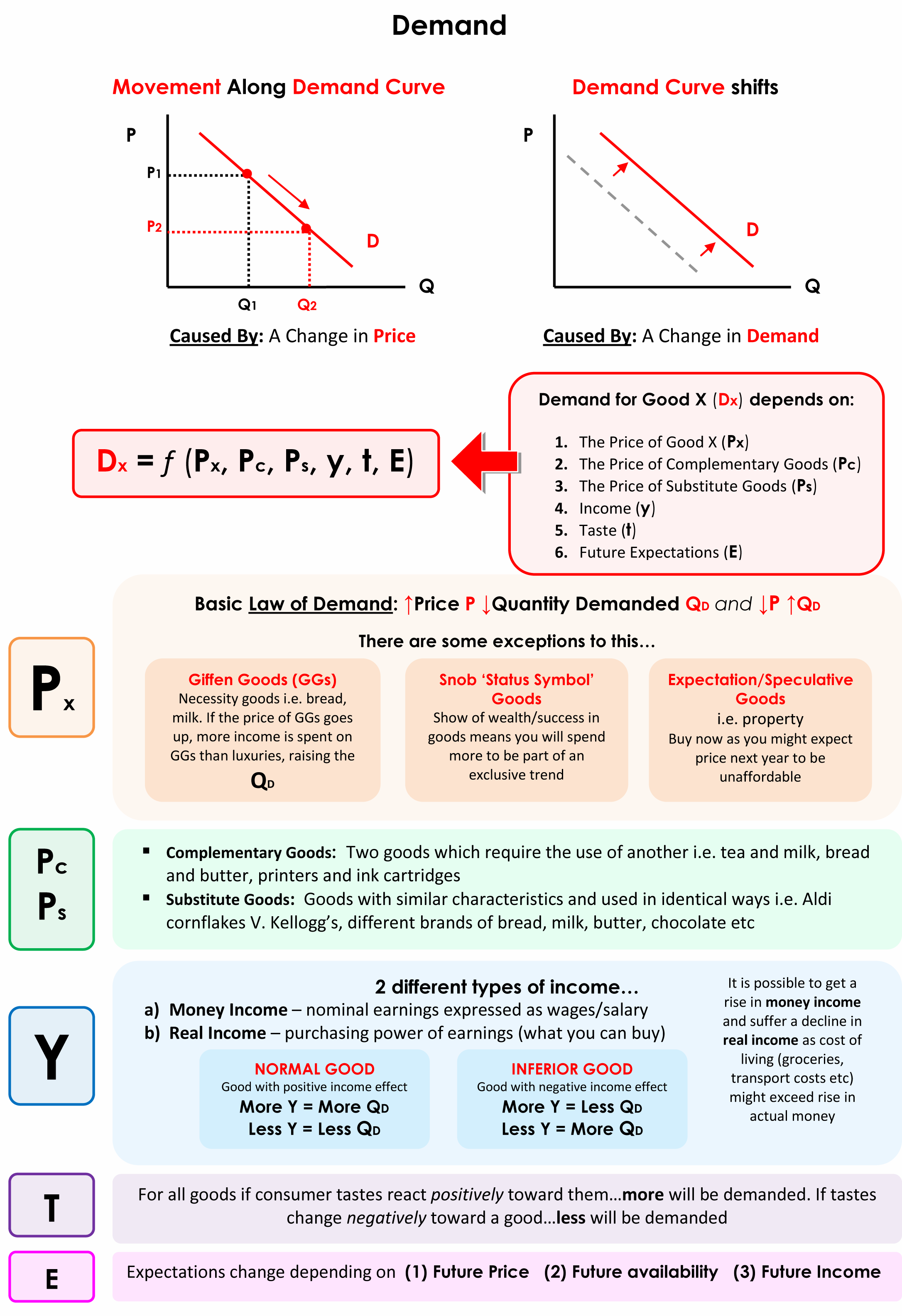
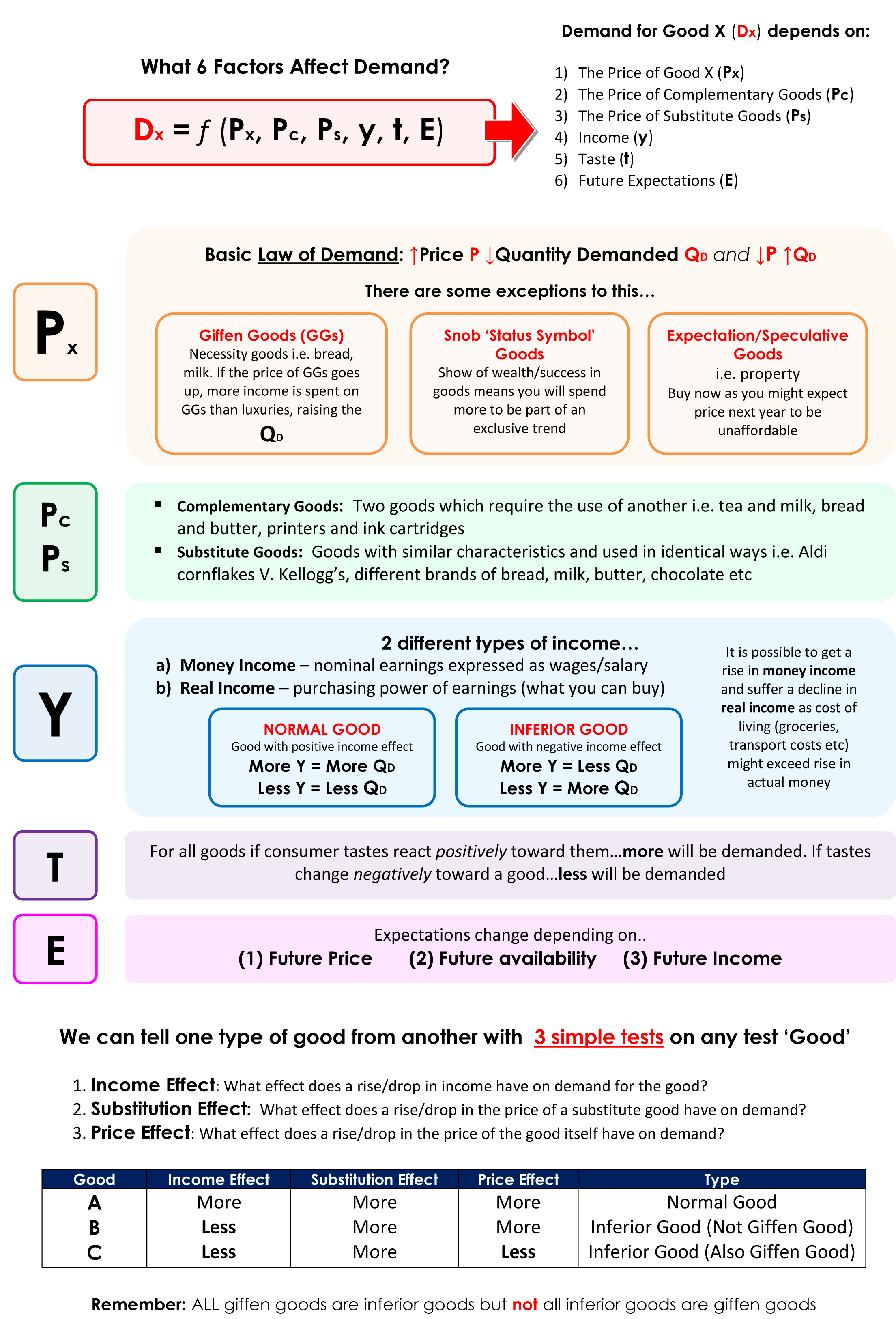
Now we get more into the nuts and bolts of economics (contain yourself, please). Next topic up is ‘Demand.’ It details what factors affect demand and how goods are classified accordingly.

Heres the PDF  PIIGSty Econ 101 #6 Demand


Economics 101 (#5) Markets

October 10, 2011

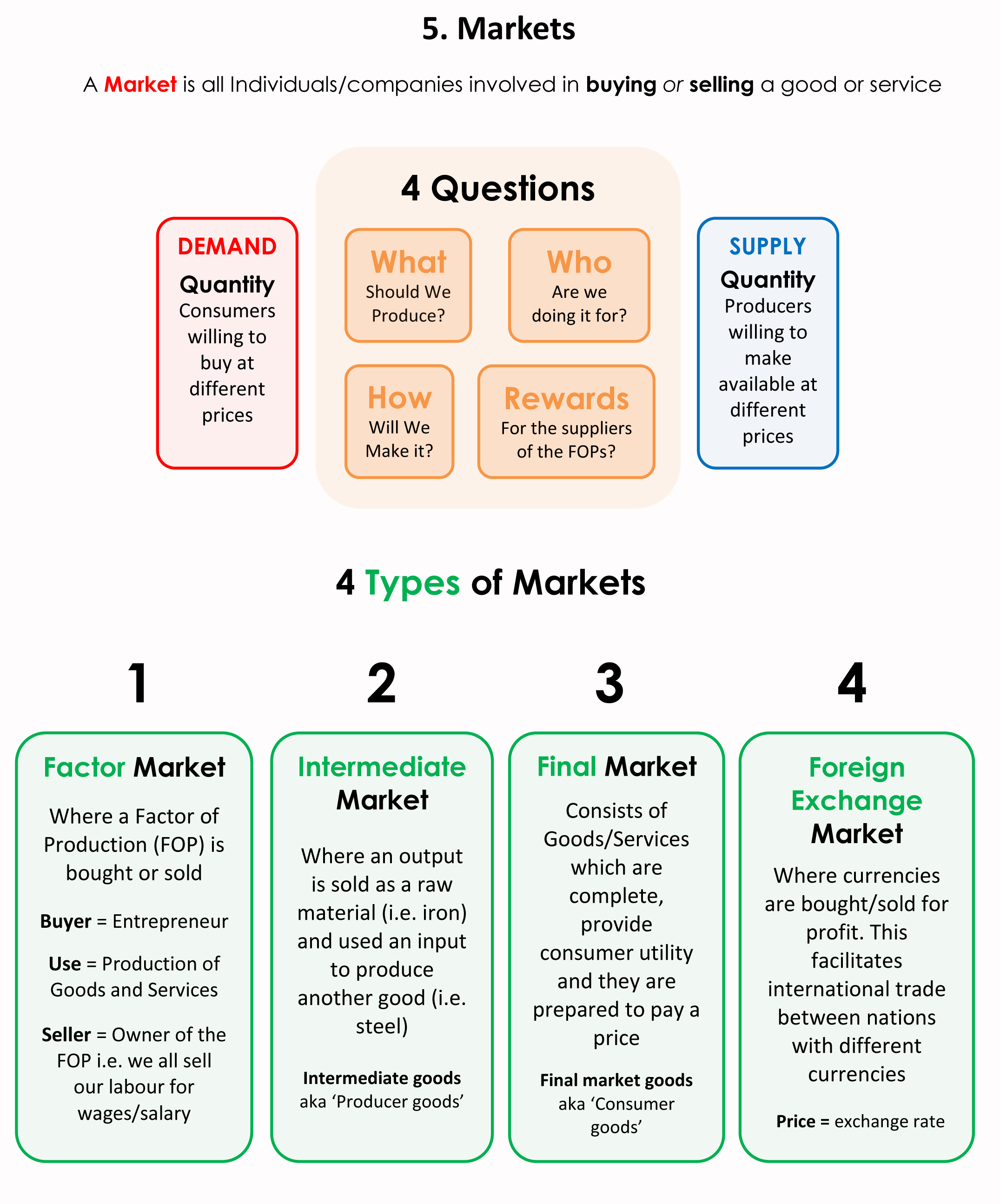
As our ‘Economics 101’ classes continue, here is the next edition on markets. Markets afterall consist of all the economic forces at work.

As always, heres the PDF PIIGSTY Econ 101 #5 Markets


Merkel and Sarkozy Seek to Batten Down the Hatches before the Big Storm

October 10, 2011

German Chancellor Merkel and French President Sarkozy agreed Sunday (9 October) to recapitalise and therefore shore up European banks to the tune of €200bn to storm-proof them in case of another major shock to the financial system (if need be…). Is this a good or a bad move?

Well, its both.

Good

  • European leaders are starting to think seriously about tackling the solvency and liquidity crises in major European banks (‘encouraged’ by last weeks collapse of the Franco-Belgian lender Dexia)
  • A united Franco-German effort is a show of strength and calm amid the crisis atmosphere
  • Tackling the ‘bank’ problem should, in theory, stop the bleeding quicker should a major negative financial event occur on the scale of the collapse of Lehman Brothers in September 2008.
  • Overall, shoring up the banks should stabilise investor confidence (to what extent is unknown) and therefore quell some volatility in the markets

Read the rest of this entry »


PIIGSty Evolution Series #1: Evolution of the EU

October 4, 2011

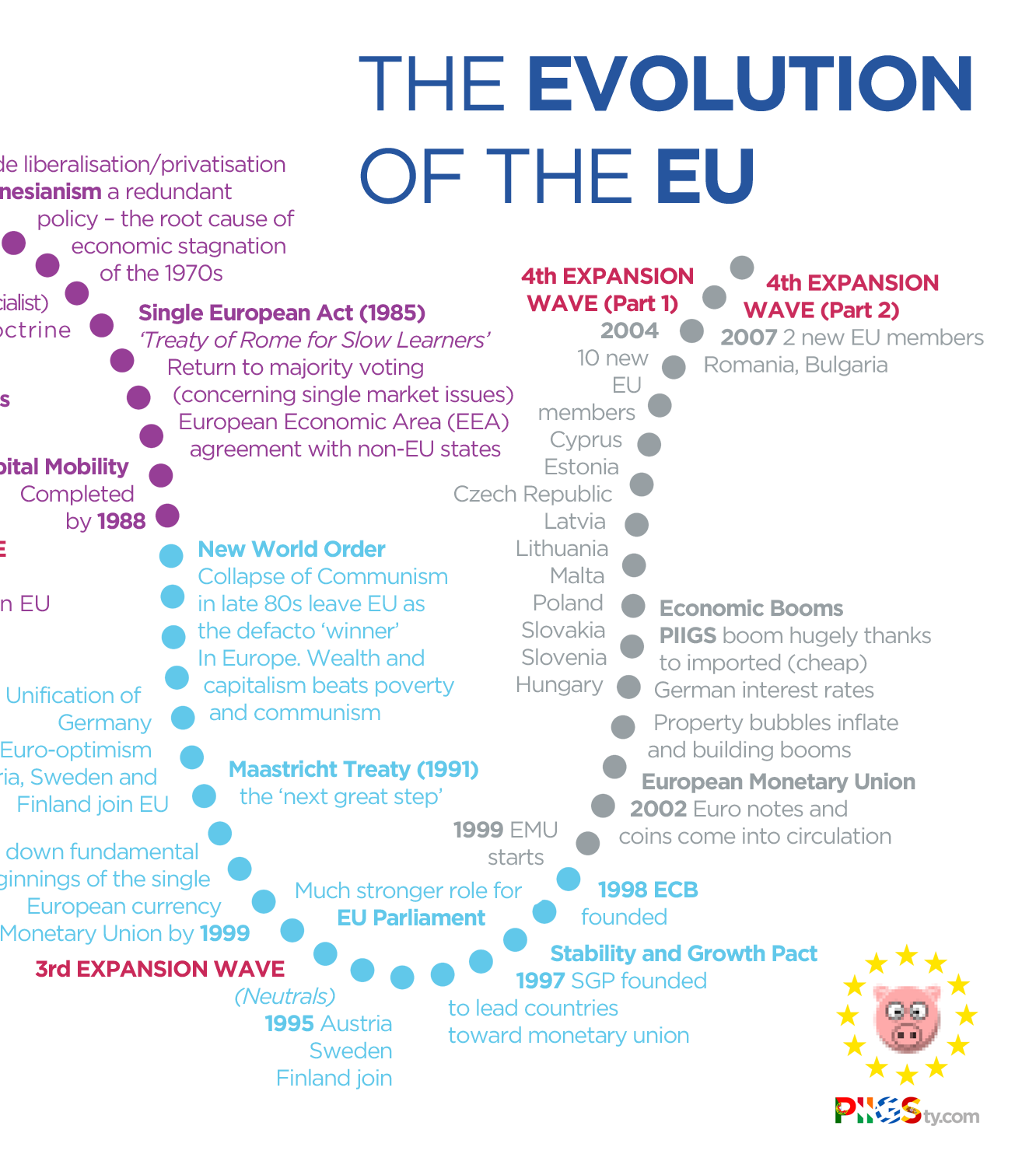
Today, PIIGSty proudly presents its first original graphic in a new ‘Evolution’ series on EU issues

Naturally, the subject of our first one is *drumroll*The Evolution of the EU


Download the PDF below (print it and share!)

PIIGSty Evolution #1 Evolution of the EU

Always remember to get in touch with suggestions for future graphics to PIIGSty@gmail.com


The PIIGS 10 Year Bond Problem

October 4, 2011

We all know why the PIGs have needed to source temporary financing/bailout funds from the EU-IMF  – it was just too expensive to continue borrowing vital operational funds through the bond markets (the usual route). Think of it this way. When investors (say, big German/French/Belgian/British banks) buy €1bn worth of Greek bonds, they’ll get €1bn back in 10 years + interest @ X%. This X% is the ‘yield’ (premium) to the investor but the ‘excess cost’ to Greece of issuing the debt/bond (i.e Greek borrowing)

Why would the ‘yield/cost’ go up?

  • Investors HATE risk. Risk costs money and risky investments aren’t likely to attract many takers.
  • Greek bonds are VERY risky because with all this talk about haircuts (slicing a chunk off the €1bn principle) to European bank debt in the PIIGS, investors may think that government debt could be next for the chop (in some way or another)
  • Buyers of Greek bonds will need encouragement for taking on more risk i.e a higher premium (a higher X%)
  • This means that investors buying Greek debt will demand more – and Greece will have to pay more. Greece can’t afford to pay more interest because it comes out of the funds that pay for the to day to day running of the Greek economy. Pressure on the flow of that cash could cripple the economy (and, you never know, cause a revolution).
  • So, Greece can’t borrow that way – it needs a bailout from the EU-IMF (or, more specifically, the ‘troika’ – the European Commission (EU), European Central Bank (ECB) and International Monetary Fund (IMF).

Interestingly, for each recipient of EU-IMF aid, the ‘tipping point’ (the cost or bond ‘yield’ at which countries was forced to ask for help) was different.

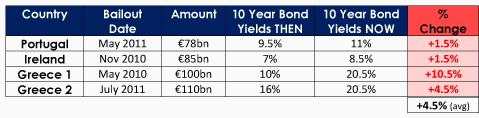
PIIGSty compares the situation then with the situation now, in October 2011 (approximated and rounded figures via Trading Economics).

On average, prices of 10 year bonds (cost of borrowing the usual way remember) have actually increased (its more expensive) across the three PIGs since the various bailouts were initiated (-4.5%). Greece has deteriorated significantly (obviously, considering the need for a 2nd €110bn bailout in July). Ireland and Portugal have coincidentally declined by approximately equal levels (-1.5%).

The tipping point for the PIGs have proven to be between 7%-10% (Greece 2 being the exceptional case) – this compares with current levels of 5.16% for Spain and 5.41% for Italy (and 1.77% for Germany).


Europe 2011: “An Intergovernmental Event of 26 Men and 1 Woman”

October 4, 2011

Here at PIIGSty.com – the issue of the inadequacy of the EFSF has been long discussed, an issue which has recently reared its ugly head again at meetings of the IMF and G20. We decided to sit back and wait for the hysteria to die down in recent weeks and for clarity to replace hyperbole. Since September 20th, we have learned some key things about the eurozone (EZ) crisis. Heres a run down of some activity in the key players.

Germany

Chancellor Angela Merkel has been triumphantly congratulated on her overwhelming Bundestag vote to expand the borrowing capabilities of the EFSF (as agreed in the July 21 meeting) and rightly so.  The vote also succeeded in stablising her CDU-FDP coalition with a combined 315 votes FOR and only 13 AGAINST) despite huge misgivings, meaning the crossover opposition support from the Social Democrats and Greens wasn’t as critical as some commentators had expected. Of course, the market pleasing 52385 vote victory is bittersweet. First, the good news. The good ship Europe was steadied temporarily and the media outlets ignored the Greek crisis for at least a day. The bad news. That same ship is essentially still hurtling toward the same reef, likely to founder eventually on those sharp (and self chiseled) Athenian rocks. The cannons can sink some foes along the way but the course is set if the wheel isn’t turned.

Why not turn the wheel? Europe is still playing catch up and continues to woefully and frantically follow events rather than lead them. The ‘Merkel wins’ narrative was always going to change. A €440bn EFSF is inadequate and the return to market turmoil in October confirms that. The fact that even a simple enlargement of the fund (which was more procedural than a sign of proactive EZ economic governance) has shown that any future necessary financing of bailouts or bank recapitalisations are just not on. The EZ’s effectiveness to deal with this crisis has now been formally politically neutered.

Germany will ultimately (after all EZ parliaments pass the EFSF reforms) be responsible for nearly 50% of the EFSF fund, around €210bn. The likelihood the ‘Merkel-Schaeuble (her Finance minister)’ doctrine of ‘no more bailout money’ will change beyond that is just implausible and politically suicidal.

Greece

Greece remains the problem child of Europe. Fostered under a European monetary system it never ascribed to wholeheartedly (since the Greeks were never too fond of following the rules of EMU) the Greek-fueled EZ debt crisis remains poised to cause a financial earthquake, especially if its spreads. To say this is only because of the petulance of some myopic Greek politicians isn’t fair but consensual decision making in Athens is proving elusive. Opposition parties are steering clear of the austerity and privatization plans, even objecting openly to the proposed cull of 30,000 public sector workers, despite the costly historical burden this sector represents – currently 45% of the entire Greek economy.

Read the rest of this entry »