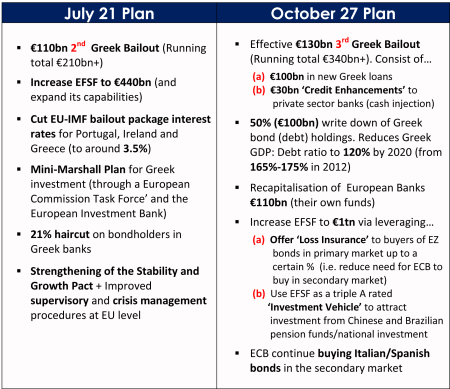
 The aftermath of the recent October 27 EU summit, a recent article by Dunstan Prial for Fox Business News summed up the current state of affairs in the eurozone (EZ) debt crisis brilliantly “Europe puts out the fire but theres still a lot of smoke.” And less than a week later, Greek PM George Papandreou, to massive surprise from European leaders, decided to provide a fresh spark – and called for a referendum on the overall Greek bail-out plan to be held as early as December 4th (this call has since been endorsed unanimously by the Greek cabinet).
The Three Pronged Greek Bailout Plan
This ‘plan’ is effectively 3 plans with 3 bailouts in one form or another since May 2010. It ain’t pretty. For the Greek government, this means receiving a running total of €340bn+ of EU-IMF aid in exchange for agreeing a series of tough reforms: slashing public pay, a €50bn privatisation programme (by 2015), deep labour market reforms , new taxes and committing to repayment of the remaining Greek national debt (Just sliced down in the most recent plan to around €240bn from €340bn). Granted, the plan is extremely draconian and is vehemently opposed by working Greeks. A valid criticism does exist with the European obsession with following Merkel – the ‘High Mistress of Austerity’ as the UK Daily Telegraph referred to her – by shrinking the size of economies when they need to grow. Regardless, the plan as proposed and the effective economic leadership of the Greek economy by Franco-German dictat is the only thing keeping Greece credible in the eyes of the markets.
The Almighty Greek Gamble
With a shoestring majority in parliament, Papandreou’s government is already extremely weak and desperate to regain some popular support in the midst of deep social unrest. This is a major gamble. Sometimes, such a gamble can pay off handsomely. On the 26th of October, Merkel herself gambled by holding a full Bundestag vote on a further expansion of the EFSF prior to an EU summit, when it wasn’t necessary (a special parliamentary committee is gifted by the powerful German Constitutional Court to do this). In the end, she won a mandate in EU wide negotiations, with 503 of 596 MP votes. For Papandreou, his gamble has put a gun to European leaders heads – and they aren’t in the best mood for more compromise. They’re already rapidly exhausting their own political capital with no short term gain. One could guess that they are gambling that the much more favourable terms of the October plan (compared to the early July version), suggest that forcing Europe to try again will produce another even more favourable (pre-referendum) plan. Thats the presumptive theory, as PIIGSty sees it.
Problems
While all this might make everyone feel slightly more comfortable, there are some very obvious problems…
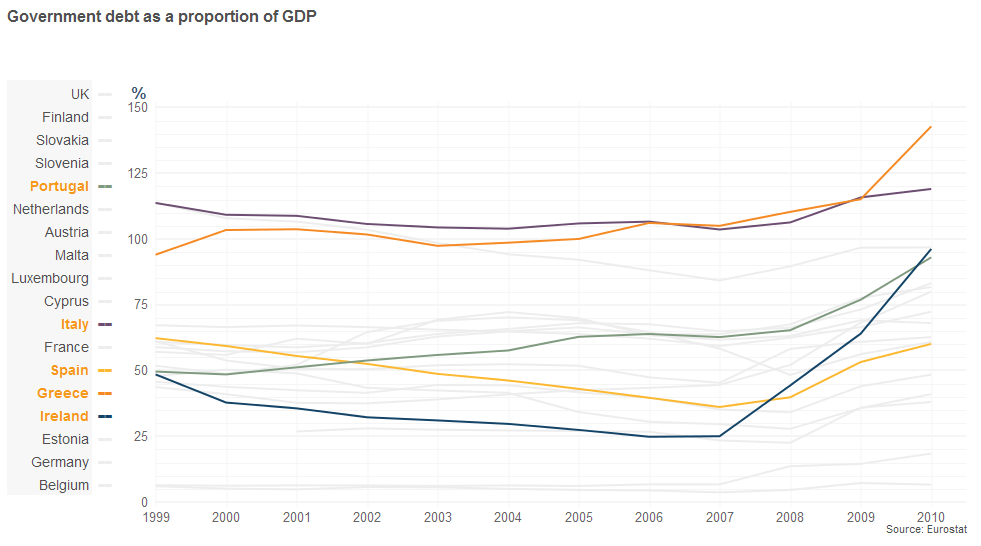
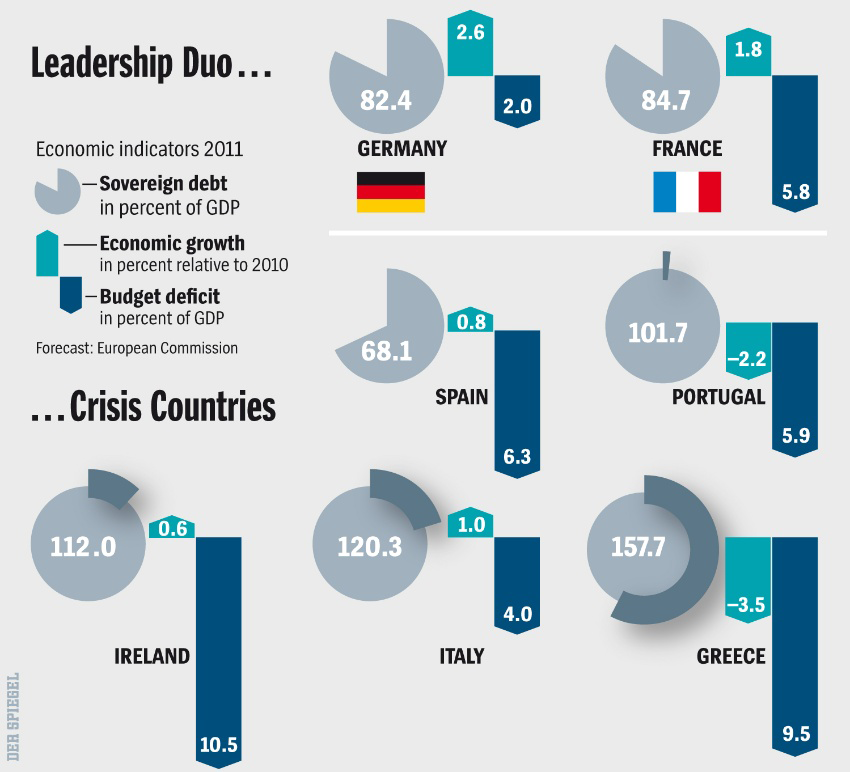
- Greek Debt: GDP of 120% is more sustainable than the (currently projected) level of 165-175% for 2012 – but who is to say that even this is sustainable. A level of 120% is the same as the current Italian level of indebtedness which is causing such consternation. Studies, notably those by Rogoff and Reinhart have suggested that 90% is the most feasible level which won’t cripple growth or risk insolvency (and so convince the markets)
- EFSF: The proposed increase from €440bn to €1tn is mainly through promises of Asian assistance (or partnership) and providing ‘insurance’ on bond purchases on 20-30% of the value. That still leaves 70-80% ‘uninsured’. Both aspects are far more vague and of debatable relevance than they might first appear. The risk remains AT ANY PRICE!
- The Greek Bottomless Pit (and that Referendum): For Europe, giving Greece nearly half a trillion euro (in either direct bailout funds or write downs) and receiving weak assurances, and reluctance to reform while market turmoil continues unabated – is pushing Merkel and Sarkozy (and their governments) into full and open questioning about whether Greece should remain in the euro and, by natural extension, the EU. Saving Northern European banks, for now, might seem worth the effort. If the Greek bailout ‘referendum’ fails, then – whether the Greeks like it or not – their state will be declared insolvent by the markets and face a messy default. Those Northern European banks which can’t absorb the impact of a Greek default will also find themselves insolvent.
- The Northern European Economies: With a combined €750-€800bn of debts and sluggish interbank funding, the economies of Northern Europe are very aware of the ticking ‘Lehman’ time bombs on their doorstep – considering their exposure to the PIIGS. Should the sovereign debt crisis require deeper and deeper haircuts on PIIGS debt, the solvency of these banks is put in doubt. The prospect of large scale bank write downs is the reason European bank shares rise or plummet with the success or failure of sovereign debt plans.
That’s a short summary of the remaining problems…
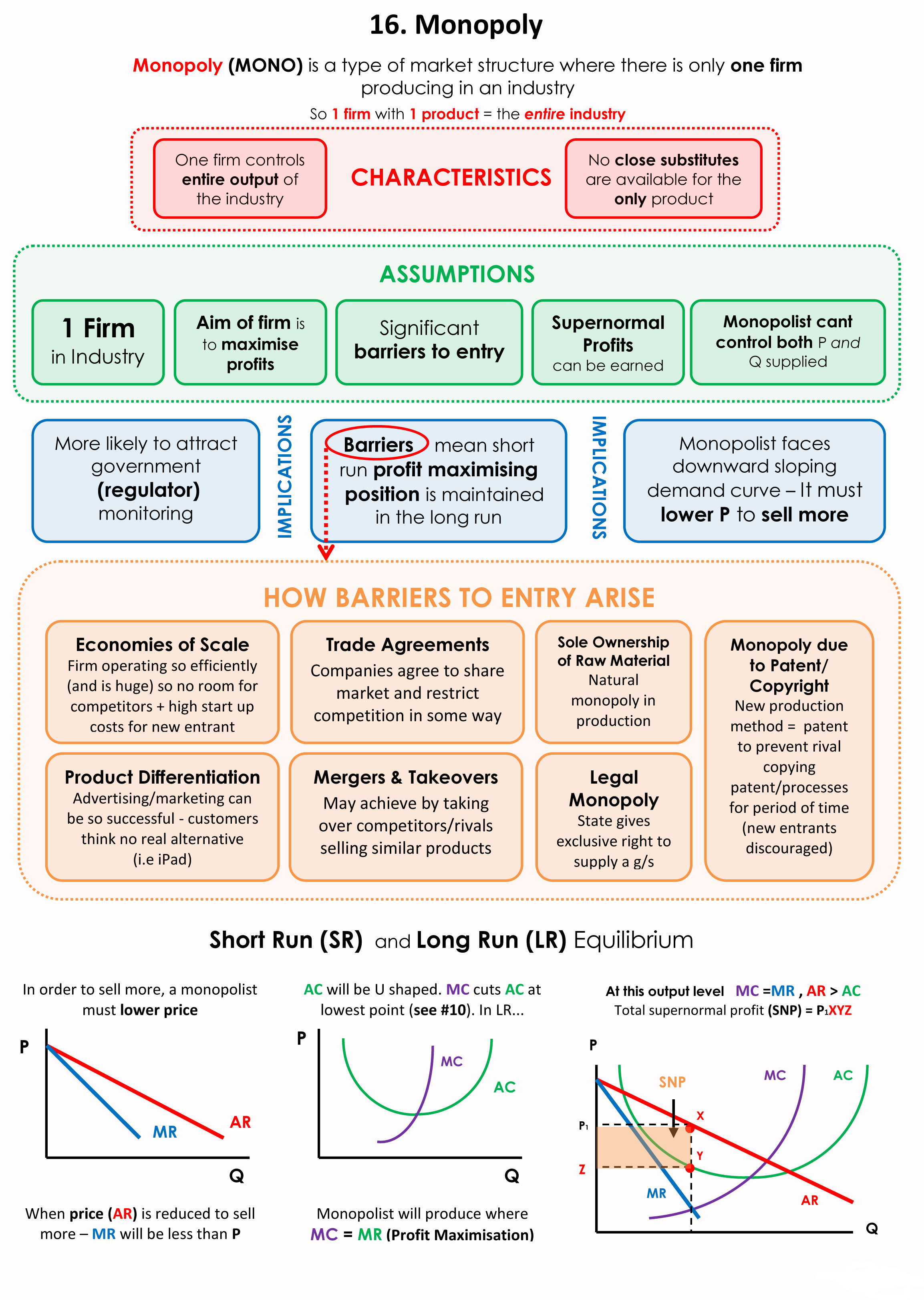
 Next up in our Econ 101 classes is Price Discrimination. This is defined as the selling of a good (or service) to different consumers at different prices, where such prices aren’t caused by differences in cost.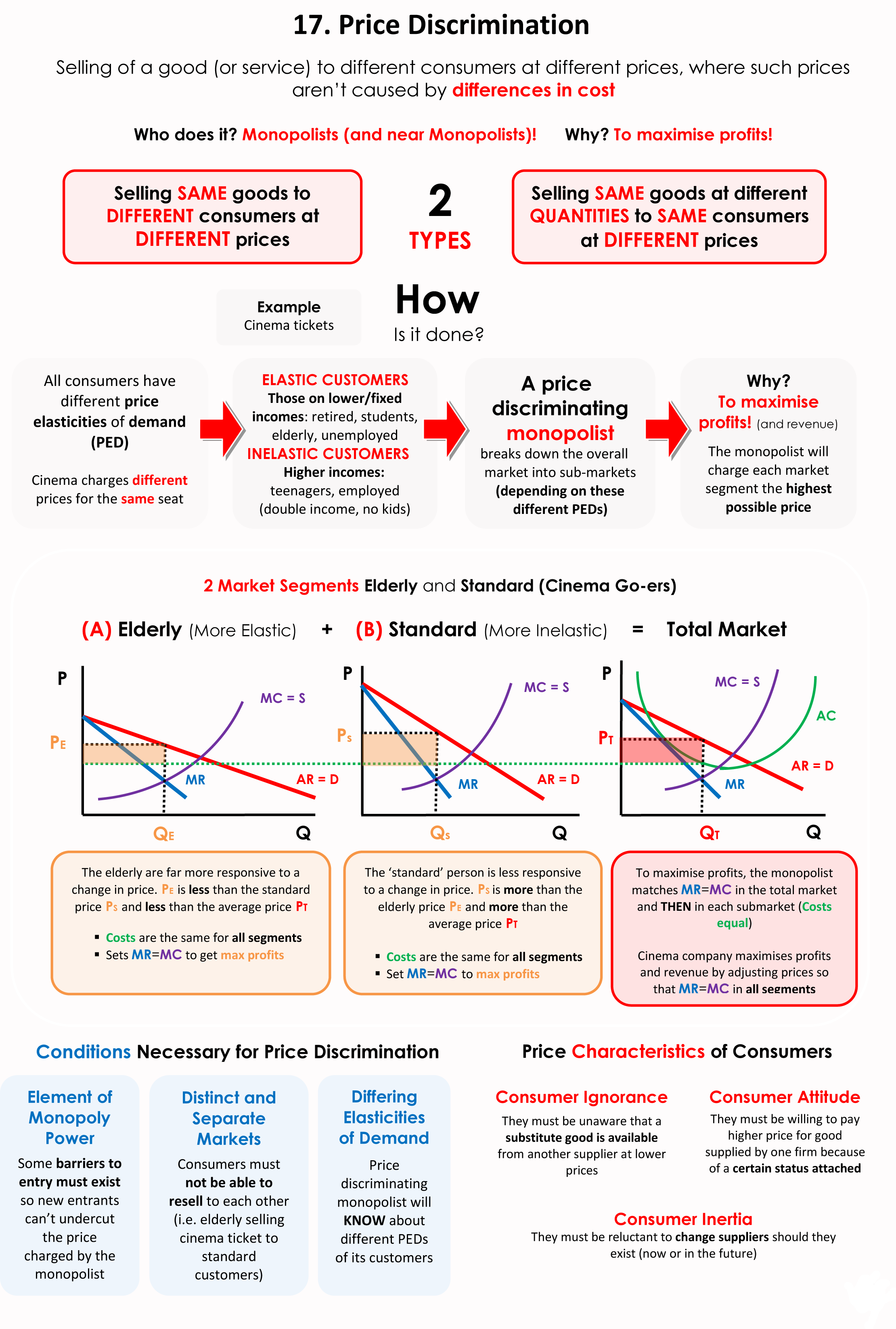


 Posted by Editor











 piigsty