UBS Economists on the € (Echos PIIGSty.com!)

September 9, 2011

In the PIIGSty Publication on the euro, we said there are fundamental aspects to the single currency which make its collapse or break-up next to impossible. Looks like we’re not alone in that (learned) opinion! Economists at UBS have totted up the sums on the cost of a country withdrawing from the euro. It doesn’t show a pretty picture.

Heres the PDF

Their main finding: “the Euro (as currently constituted) should not exist.”

The basic summary of their findings are as follows:

  • The euro isn’t working so either its operation or its membership must change
  • Most likely scenario: the eurozone (EZ-17) moves “painfully” toward fiscal integration

Economic Costs

  • Consequences of  a weaker country (PIIGS) leaving the euro are immense (40-50% of GDP in year 1). This includes the cost of sovereign and corporate defaults and a collapse of national banking and trade.
  • Consequences of a stronger country (Germany) leaving the euro are still immense (20-25% of GDP in year 1). Germany would avoid sovereign default and collapse of their banking system but would incur costs related to corporate default and trade decline.
  • Cheapest option? Bail out the ‘PIG’ nations (single hit of around 5.5% of GDP)

Read the rest of this entry »


Economics 101 (#3) Economy of Scale

August 30, 2011

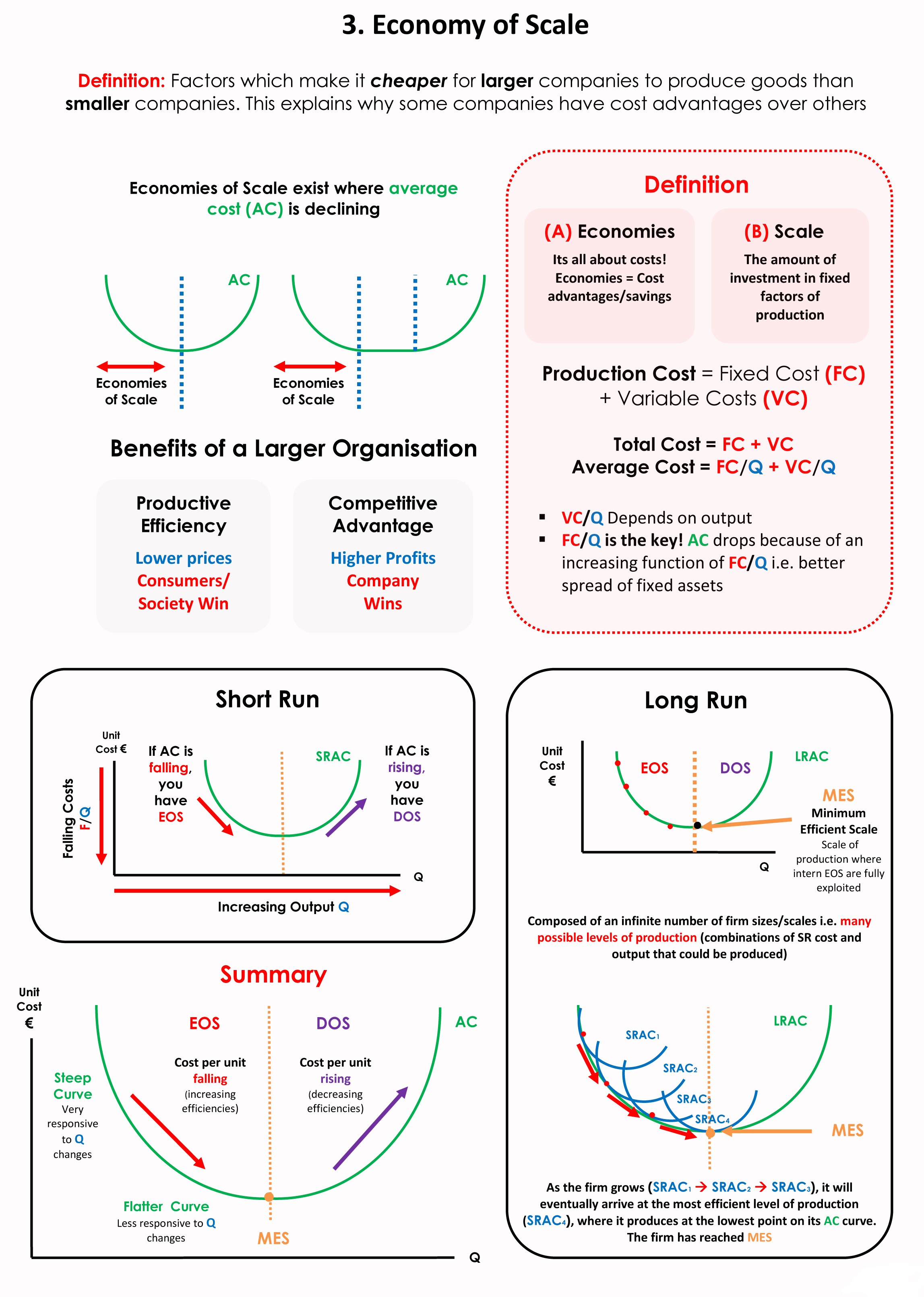
The term ‘Economy of Scale‘ is all about the factors which make it cheaper for larger firms to produce goods than smaller firms

This PIIGSty presentation sums this up  PIIGSty Economy of Scale

Heres the PDF PIIGSTY Econ 101 #3 Economy of Scale


Economics 101 (#2) The Producer

August 30, 2011

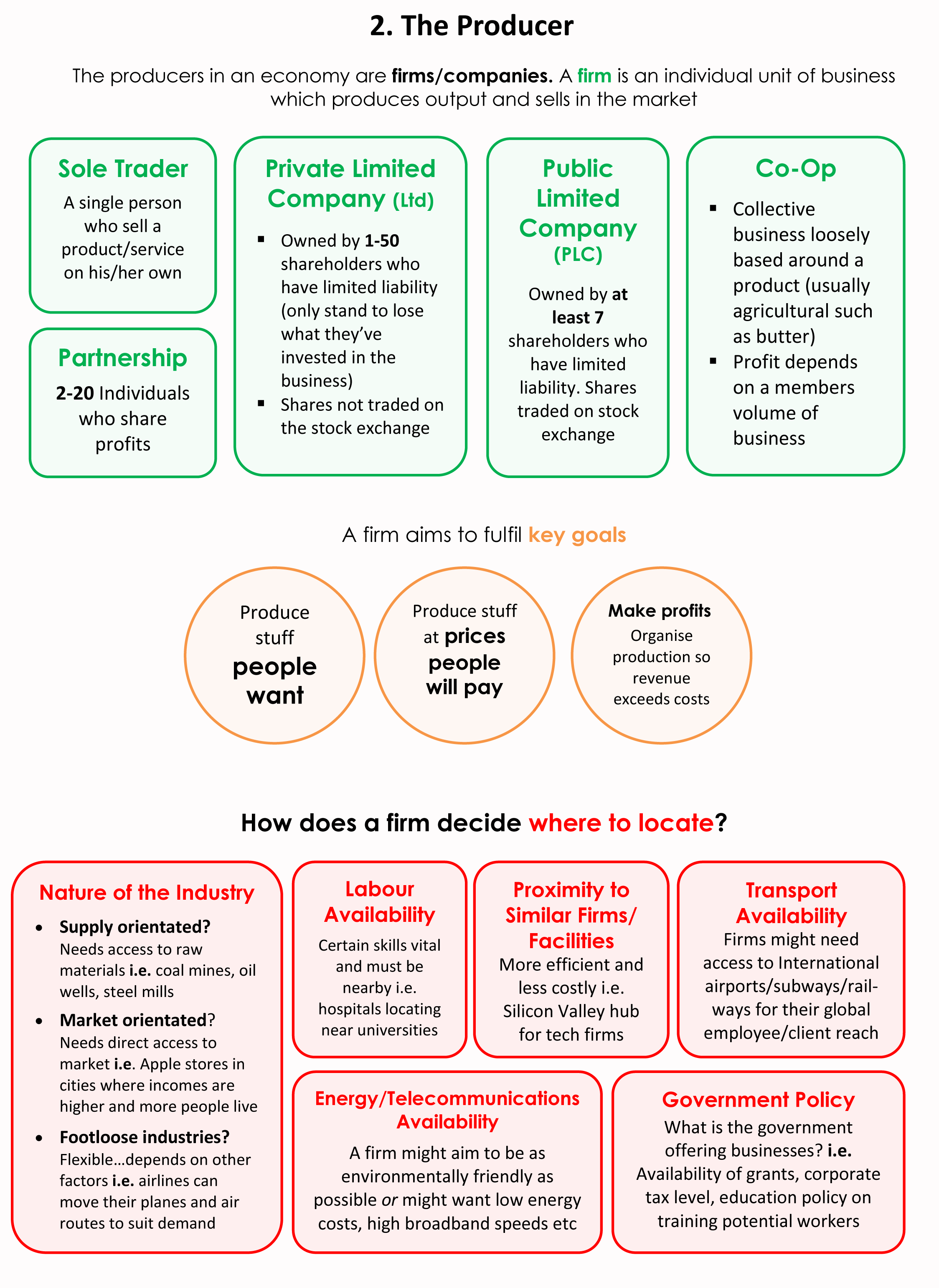
Next up: The Producer. The producers in an economy are firms/companies who operate for profit.

A firm is an individual unit of business which produces output and sells its product in the market.

Heres the PDF PIIGSTY Econ 101 #2 Producer


Economics 101 (#1) The Factors of Production

August 30, 2011

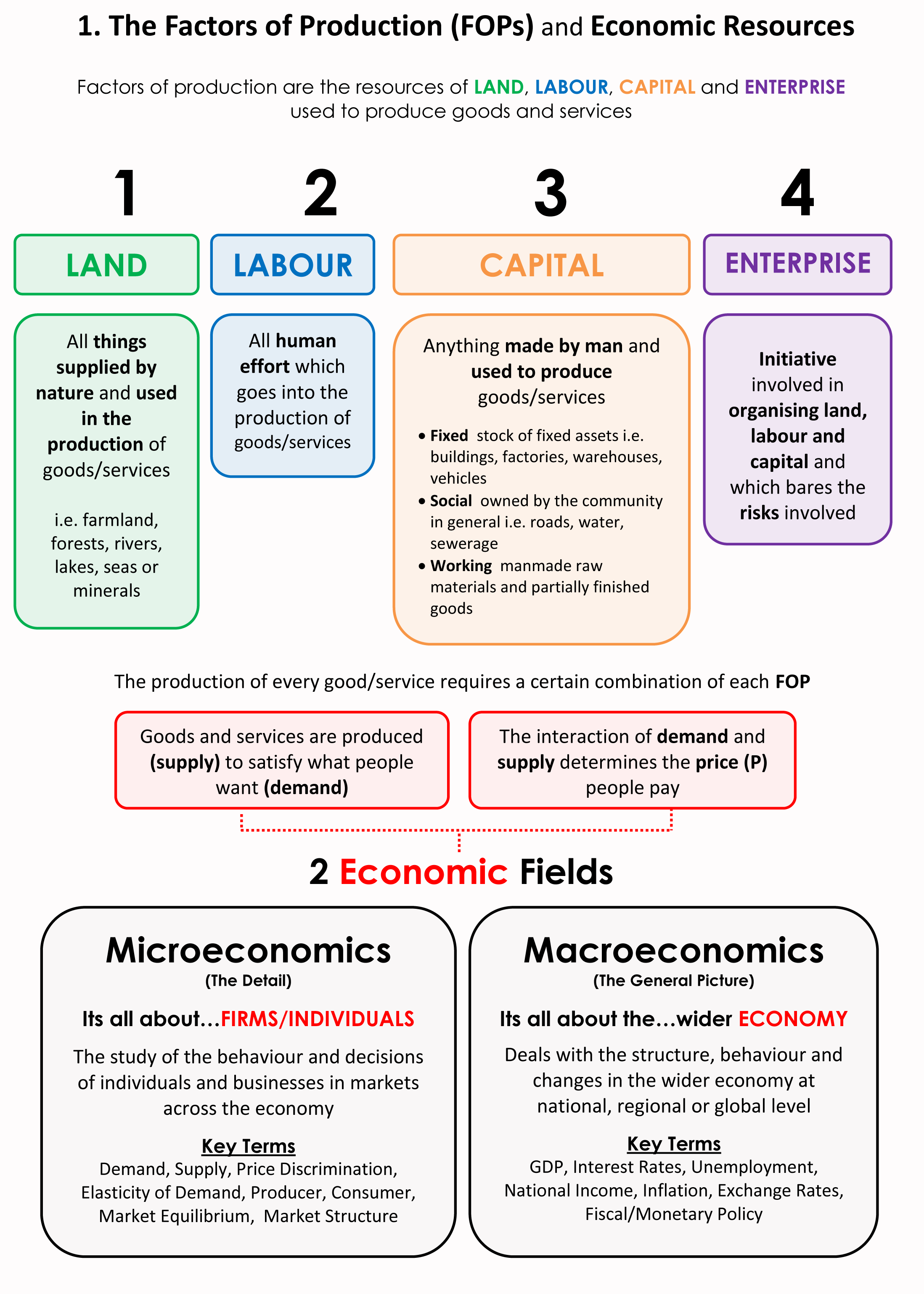
The most basic concept in economics is (duh!) the 4 factors of production – the component parts of the entire economy.

An understanding of these is VITAL!

Heres the PDF  PIIGSTY Econ 101 #1 FOPs


Economics 101!

August 30, 2011

Today PIIGSty.com is starting a new series ‘Economics 101’- a series of secondary school/high school level economics for those needing a more fundamental grasp of basic concepts.

Please feel free (as usual) to email us at piigsty@gmail.com if anything seems a little confusing…


Bonds, Bonds and…Eurobonds!

August 30, 2011

Cash is liquid. Lack of cash is a lack of liquidity. Hence, the PIIGS (or at least, Greece, Ireland and Portugal so far) have this problem. They’re tackling it with massive austerity programmes to try bring government revenue (taxes) to balance with expenditure (health, education, transport etc). Austerity takes time.

A key question that comes up is: What are bonds? The real question should be: how do governments borrow? How do they pay for deficits? Right now, each EZ member issues its own debt (in the form of bonds) to pay for deficits in their national accounts.

Each eurozone (EZ) member issues debt in the form of bonds. A bond isn’t a physical thing. Its an IOU. You can think of it as an embossed piece of paper with the amount borrowed written on it if you’d like with an interest rate attached i.e. ‘I, Ireland, promise to pay you €1m in 20 years at 4% interest.’

The government gets the money to use now and agrees to pay it later. It is for this reason that bonds are called ‘Treasury Bills’ or ‘Gilt-edged Securities’ because they go to pay for the running of the country and a country is hardly likely to go bankrupt like a business can.

‘The Market’

Lets use Ireland as an example. Ireland uses the euro and needs cash. Ireland issues debt in the form of a bond. What this means is that Ireland asks investors (usually banks at home and abroad) to borrow money at a certain interest rate. Like any loan, the higher the risk, the higher the bank will charge you per year in interest. At the end of a stated period (could be 2 years or 100) the investor/banks get paid the face value of the bond back. The interest is the profit on the deal.

Suppose an investor begin to reckon that his Irish bonds aren’t a great investment after all?

This could be because:

  1. Theres high inflation in Ireland and the value of the original bond is declining
  2. Theres a risk Ireland wont pay the bond (default)

You’ve probably guessed (2) is the problematic one today in the PIIGS. Investors are even faced with a slightly different version of ‘default’ called ‘debt restructuring’ which usually means investors receive a ‘haircut’ i.e. lose a high % of the initial value written on the bond.

An Investor thinks he might get stiffed. What does he do?

The bond (embossed paper remember!) doesn’t just sit in the investors drawer. He trades it with other investors on bond markets.  If he thinks that suddenly the Irish bonds he owns are going to lose their value (or not be paid up), he’ll sell it!

Well, he charges a higher rate of interest. This makes it very expensive for Country A to borrow. Country A has a problem. It must borrow to pay for its mounting deficits or else it wont be able to pay any of its debts and default.

What if he still holds Irish bonds? No matter. Bondholders get paid back before shareholders do.


So, whats the deal with Eurobonds?

As one recent image from The Economist illustrated well, ‘Eurobonds’ would be issued by the eurozone-17, not single member nations.

The reason why this would be a good thing is pretty straightforward. Imagine you buy your mother a sub-par present for her birthday and want to save face by combining that gift with your brothers much better one and put both your names on the collective birthday bundle. The good balances out the bad. Yin and yang, etc. Of course, the ‘good’ in this case are the six AAA rated eurozone nations and the bad are the PIIGS. Collectively, deficit/debt problems in the EZ look reasonable. For the EZ as a whole, the Debt : GDP ratio is 88% (higher on the periphery balanced by lower levels in the core.) This compares with a level of 98% for the US, 83% for the UK. Deficit levels in the EZ-17 are 4%, far better than the US level of 10% and 8.5% for the UK.

Read the rest of this entry »


Fortune Magazine’s take on Europe

August 19, 2011

Fortune Magazine’s Shawn Tully has a stab at analysing the eurozone/European crisis. Its nothing we haven’t covered before at PIIGSty.com but heres the summary:

  • Greece is a mess. The climate for business is extremely weak
  • Theres two problems feeding into the stock market volatility (a) Fear of contagion in Europe (2) S&P downgrade of US sovereign debt (reflective of a polarised political environment in the US Congress)
  • Rumours suggest that French banks (big owners of Italian and Spanish bonds) might be struggling to stay liquid
  • European credit crunch is happening (European banks are worried and reluctant to lend, slowing EU growth) – this could kill a US recovery (EU accounts for 21% of US exports)
  • If 1 country leaves the euro, then domino effect likely causes gigantic defaults and an EU banking crash

Story of the euro

See the PIIGSty Publication on the euro – but FYI its like this…

  • Launched in 1999 aiming to bring Europe closer together (in terms of productivity and growth) and make the eurozone the equal of Asia or the US
  • Didn’t work – some took advantage of imported low interest rates (via leapfrogging on German credibility) with rates falling from 15% to the German level of around 5%. PIIGS boomed!
  • These countries (Italy, Spain, Greece are mentioned) didn’t allow productivity levels to improve – they binged on cheap credit – continued support for cartels, anti-competitive practices and centralised wage bargaining.
  • Example of Greece: Money didn’t go to improve the capacity of the economy – it went on discretionary/consumer spending – meaning higher wages. Greece became expensive for tourists.
  • ECB now has to buy Spanish/Italian bonds to ease the pressure on the now debt laden countries from falling victim to contagion from Greece

Two things need to happen…

  1. Austerity-  the PIIGS need to close their deficit gaps
  2. Modernisation and Growth – PIIGS need to grow (to pay the debt) via modernisation/privatisation plans AND belated open their markets

Read the rest of this entry »


Ireland #1 (GDP Collapse is World’s Worst)

August 18, 2011

A sobering visual from the Economist Daily Chart 18 Aug 2011

Also featured? Every member of the PIIGS has suffered GDP decline since late 2007. Ireland has fared worst with Greece  and Italy close behind.

Key stat: Ireland’s income per head is now a painful 25% below its previous trend. Its GDP is 12% lower


Greek Collateral Damage

August 18, 2011

Have a look at the previous PIIGSty post on the EFSF. Strong misgivings abound in eurozone (EZ) governments about being seen to ‘give in to European excesses.’ Its not just in relation to growing the EFSF fund. It turns out that these countries need some extra ‘convincing’ from Greece to keep their support for their 2nd bailout onside.

‘Convincing’ = Greek cash deposits in exchange for loans. This is effectively shaking down Greece for some cash guarantees (bit like picking a fight with a 50lb weakling at this stage). Where would Greece get the money?  Loans. You guessed it – some friendly EZ countries want Greece to borrow some money, guarantee them so they can loan Greece money. Perfect sense.  Why? Politics. Again. Seems like the July 21 summit is bordering on the Versailles Treaty 2.0

So far 5 countries want some sort of back-up guarantees – Austria, Finland, Slovakia, Slovenia and the Netherlands. To date, the Greeks have only agreed a deal with Finland (with a strong euro-sceptic opposition party, an increasingly euro-sceptic public and the power to veto the Greek 2nd bailout deal agreed on July 21). The worry is…that as Finland goes…so goes the rest…?

Official PIIGSty Conclusion: Europe is wasting more time. Without deft leadership and a united response, EU/eurozone leaders are acting like vultures picking at the near dead corpse of a fallen colleague.


Merkel and Sarkozy Meet (16 August): Markets Shrug

August 17, 2011

When you think about options for the eurozone (EZ) – they read as such:

1. Strengthen economic governance – better coordinate EZ economies (from labour markets and tax structures upward…)

2. See point 1

So, no surprise then that the 16 August bilaterial talks between German Chancellor Merkel and French President Sarkozy has resulted in media hysteria over proposals over a ‘new eurozone government!’

The plan they’ve come up with includes the following:

  1. Eurozone ‘economic council’ led by EU president Herman van Rompuy (for now, before proper elections later)
  2. Constitutional changes to force balanced budgets aka ‘debt brakes’ in the EZ (led by French/German example)
  3. EZ Financial transaction tax from September 2011
  4. Franco-German harmonization of Corporate tax rates by 2013

Whats been ruled out?

Eurobonds (fiscal integration must come first)

The Reaction?

Ignore the hysteria. Economic governance and fiscal integration both must be achieved if the eurozone is to proceed in tact without fracturing into 2 or more pieces. Thats a fact. As President Sarkozy said yesterday “We have to converge. The status quo is impossible.”

Read the rest of this entry »